Stuffed Artichokes

I heard you salivating…

Ever since I posted this picture a few weeks ago, there’s been a ton of interest.

Well, here’s my recipe for how to make these delicious Stuffed Artichokes. As you’ll note in the recipe below, if you use a Pressure Cooker, these artichokes cook in only 10 minutes – easy and quick!

MAKE YOUR OWN RECIPE

Using this recipe as background on the ingredient and technique, you’ll know how to cut, clean and cook artichokes. Now, how might you make your own recipe? What if you:

Vary the cheese?

  • Pecorino romano, asiago, blue cheese and most any other hard/semi-hard cheese will work

Mix up the meat?

  • Chorizo, ham, bacon, pancetta, sausage, shrimp, crab, and even chicken are options.

Add veggies?

  • Shallots, carrots, mushrooms, tomatoes and most any minced vegetable can be incorporated.

Diversify the flavors?

  • For a Spanish version, use chorizo and manchego.
  • For a Greek version, use lamb sausage, oregano and feta cheese.
  • For a California twist, add blue cheese, walnuts and apples.
  • For a luxurious feel, add crab and tarragon and serve with a hollandaise dipping sauce.

You get the idea… Now, please share your recipes!!

Stuffed Artichokes

Ingredients:
¼ cup – Olive oil
4 cups – Bread crumbs
6 – Garlic cloves, minced
2 cups – Parmigiano-Reggiano, grated
½ cup – Prosciutto, minced
½ cup – Italian flat-leaf parsley, chopped
1 tsp – Salt
½ tsp – Pepper
4 – Artichokes
2 – Lemons (one halved and one juiced)
1 cup – Chicken broth

Method:
1. Toast bread crumbs in a pan or in the oven until golden brown– cool and then toss with garlic, cheese, prosciutto, parsley, salt/pepper and olive oil
2. Prepare artichokes by cutting ½ off the top with a serrated knife, trimming off the stem so that it can stand upright and then cutting about an inch off all the remaining leaf tips with kitchen shears – cut one of the lemons and use it immediately to rub the sliced artichokes to prevent browning
3. Separate the leaves with your fingers and open up the artichoke to expose the fuzzy choke – scoop it out with a grapefruit spoon or small spoon
4. Spoon about 2 tbsp stuffing into the cavity of each artichoke and 1 tsp stuffing between each leaf (work from the bottom up) – use your fingers to get the stuffing in
5. Add chicken broth and lemon juice to the Pressure Cooker pot
6. Preheat Broiler in your oven
7. Place the artichokes top up in the Pressure Cooker pot*, lock lid and set timer for 8 minutes at High Pressure (or use timing recommended by your manufacturer’s instructions).
8. Release pressure and remove lid, tilting away from you
9. Place artichokes top up on a parchment-lined baking sheet under the broiler until you see browning (it only takes a few minutes so watch carefully)
10.Serve immediately – I enjoy them without a dipping sauce but feel free to add one

*If you don’t have a Pressure Cooker, place them in a Steamer for 1 hour. To make your own Steamer, add the liquid to the bottom of a pot, place a metal colander on top (make sure its bottom doesn’t sit in the water but rather sits just above the water), bring the liquid to a boil, place the artichokes inside the colander and cover the top with a lid
Posted in Uncategorized | Leave a comment

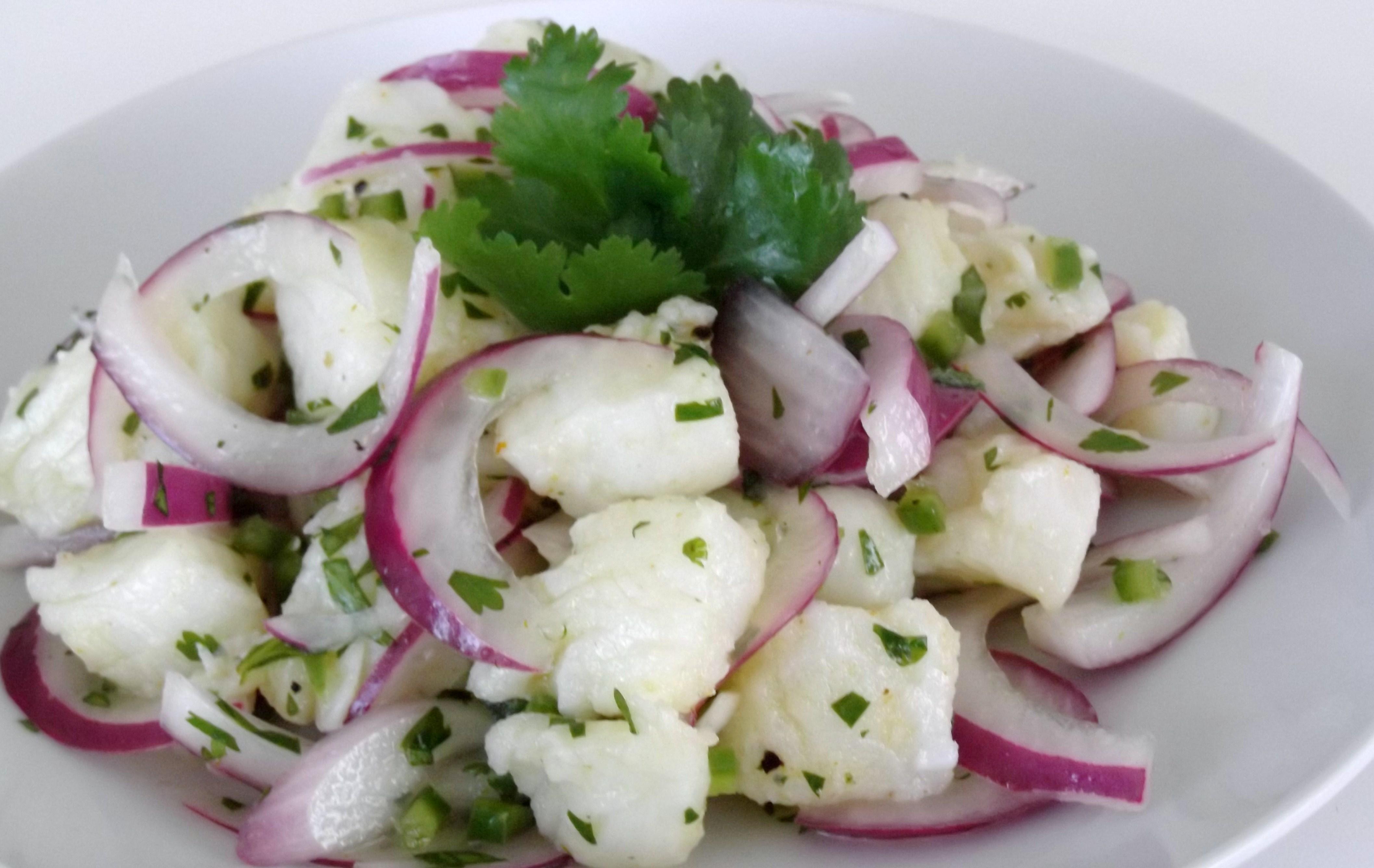
Ceviche

Chefs and foodies worldwide can’t stop talking about Peruvian cuisine.  

The result of a nearly 500-year melting pot of native Quechua culture with immigration from Spain, Africa, Japan and China, its cuisine is known for its masterful use of ingredients such as aji amarillo chile, pisco grape brandy and over 3800 varieties of potatoes.

Satisfying, yet relatively light, Peruvian cuisine plays with acid and spice to create irresistible flavors.

My husband and I frequently eat at a Peruvian restaurant in Miami where my favorite dishes include:

  • ceviche (raw seafood flavored with lime juice, onion and chiles)
  • papas a la huancaina (potatoes with a spicy cheese sauce)
  • lomo saltado (stir-fried chopped steak with onions, tomatoes and fried potatoes)

MAKE YOUR OWN RECIPE

After experimenting at home, I developed the Ceviche recipe below. Using this as background information on Ceviche’s basic ingredients and technique, how might you make your own recipe? What if you:

Vary the fish you use?

  • Any firm white fish works, as do shrimp, squid, mussels, octopus and clams.

Mix up the chile selection?

  • Depending on your tolerance, how about incorporating serranos or habaneros?
  • Or replacing the aji amarillo paste with rocoto pepper?

Diversify the flavors?

  • For an Asian twist, add ginger, garlic, soy sauce and sesame oil.
  • For a Thai version, add basil, coconut milk and sugar.
  • And for an Indian adaptation, add mango and garam masala.

MY CEVICHE RECIPE

Ingredients:                                                                        

  • 1 tbsp. – Aji amarillo paste
  • ½ cup – Fresh lime juice (use key lime if available)
  • ½ lb. – Corvina (the FRESHEST you can get, cut into bite-size pieces)
  • ½ – Jalapeno pepper (remove seeds and finely mince)
  • ¼ – Red onion (thinly sliced)
  • 1 tbsp. – Cilantro (minced)
  • Salt and pepper (to taste)

Method:

  1. Mix the aji amarillo paste into the lime juice
  2. Combine the fish, jalapeno, onion and cilantro
  3. Pour the lime juice over the fish mixture
  4. Add salt and pepper (taste) and toss well
  5. Let the ceviche rest for no more than 15 minutes and serve
Posted in Uncategorized | Leave a comment

The Sharper Your Knife, the Less You Cry

While this happens to be the title of a wonderful book by Kathleen Flinn (which I read prior to going to culinary school), it also happens to be one of the most important lessons in the kitchen.

Most kitchen injuries result from using a dull knife. If your knife is properly and regularly sharpened, you will both increase your efficiency and significantly reduce your risk of cutting yourself.

Knife maintenance consists of two steps:

1. SHARPENING YOUR KNIFE

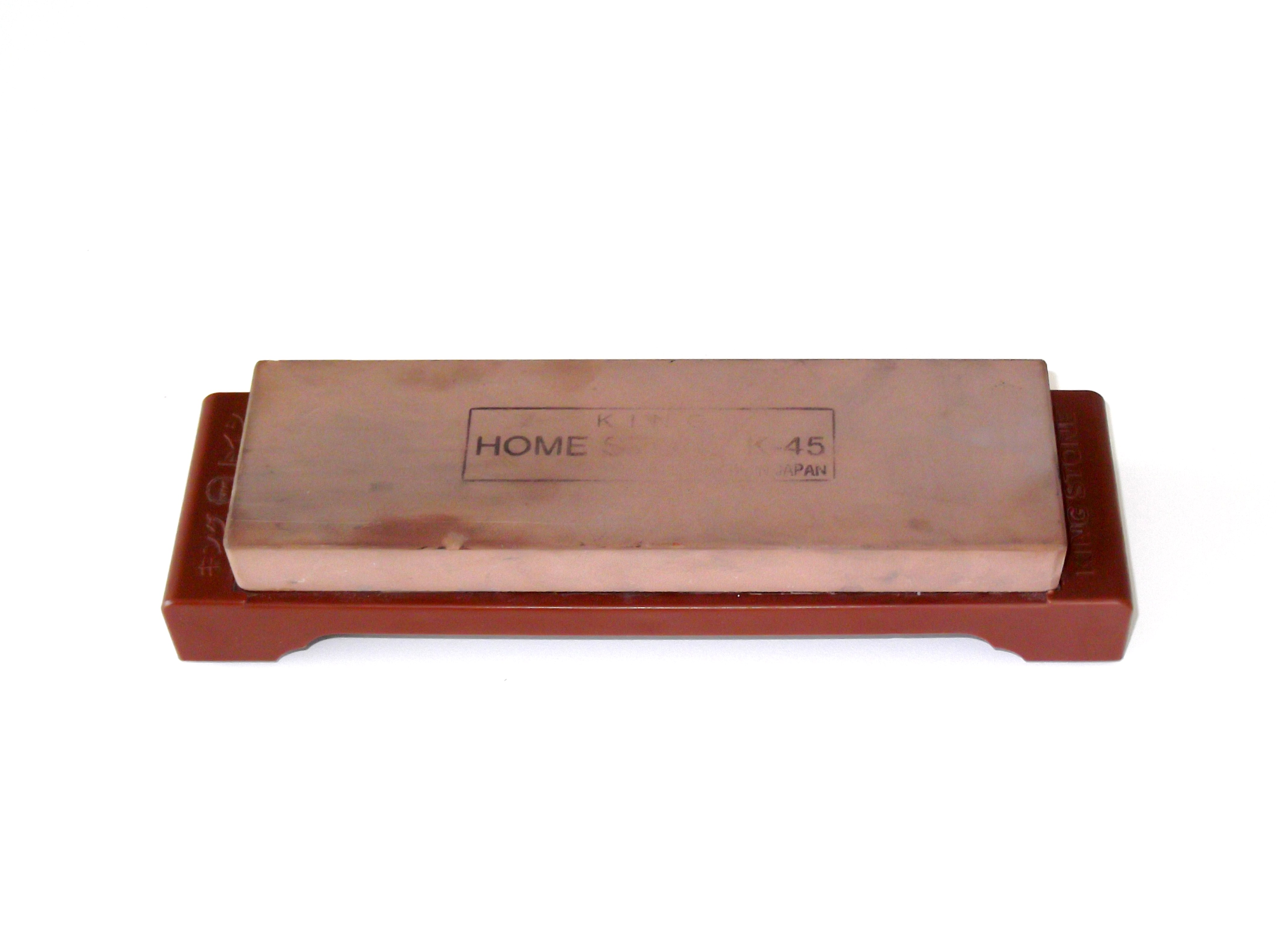
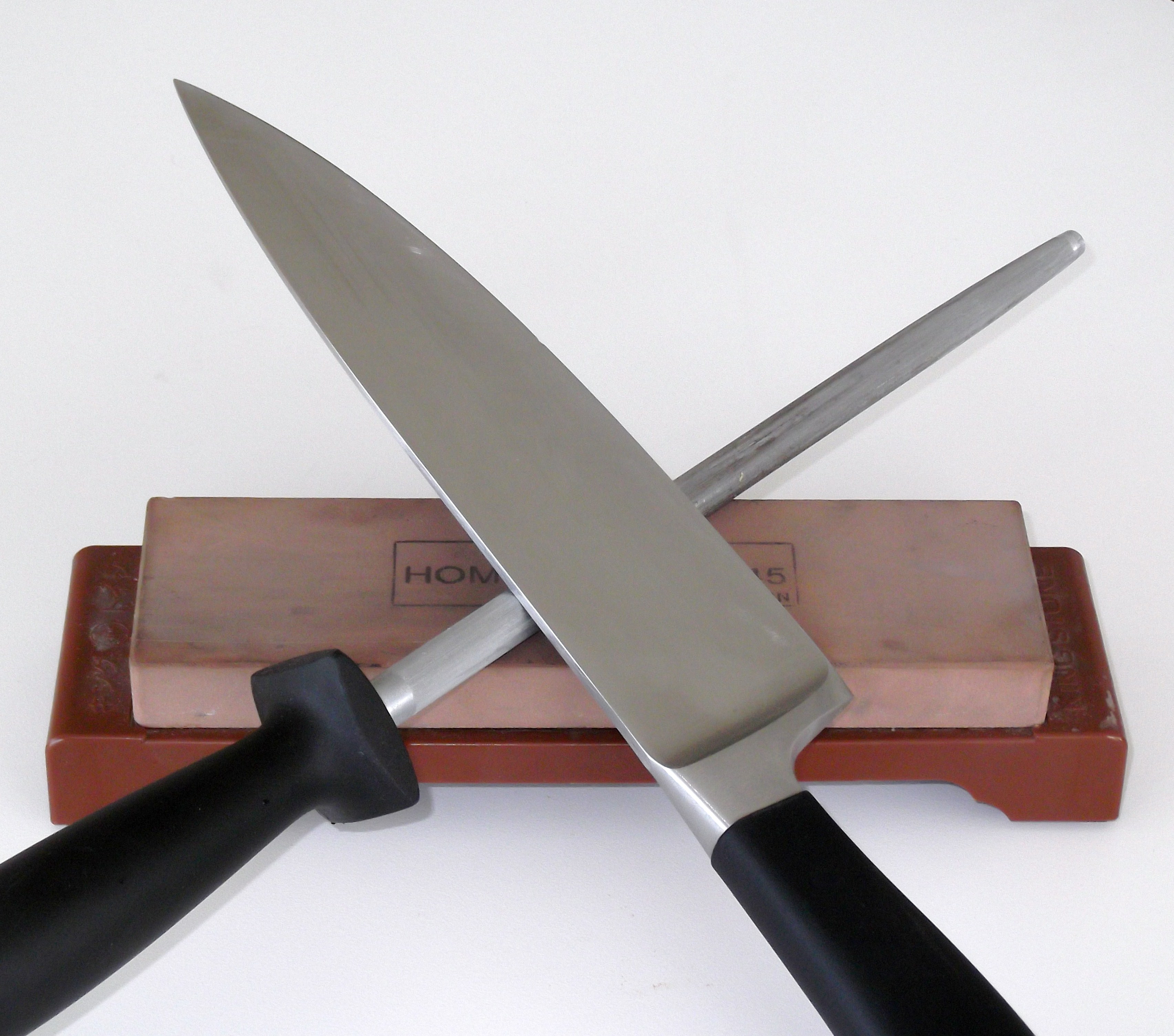
Whenever your blade begins to dull, use a sharpening stone to regrind your blade and restore its edge. Most cookware stores will offer the three most common stone options: oil, water or diamond. While diamond is the most durable, it is also the most expensive. Oil is the second most durable. However, it cuts more slowly and is a mess to clean up. Personally, I prefer a water stone like this one: http://www.jbprince.com/knife-sharpeners/comb-waterstone-1000-and-6000.asp

Here’s how to use it:

  • Drizzle water across the stone
  • Hold the heel of the blade at a 20 degree angle (for Japanese knives, you may need to use a 10 degree angle) against the stone
  • Draw the knife toward you, from heel to tip, in light, even strokes
  • Repeat on the other side starting with the tip of the blade at a 20 degree angle and push the blade away from you while maintaining light pressure
  • Repeat this process 10-20 times, moving across the stone from the coarser grit side to the fine grit side of the stone, until the blade is sharp
  • Here’s a great video from SharpeningSupplies.com for those of you who are more visual: http://www.sharpeningsupplies.com/freehand-sharpening-video.aspx

2. HONING YOUR KNIFE

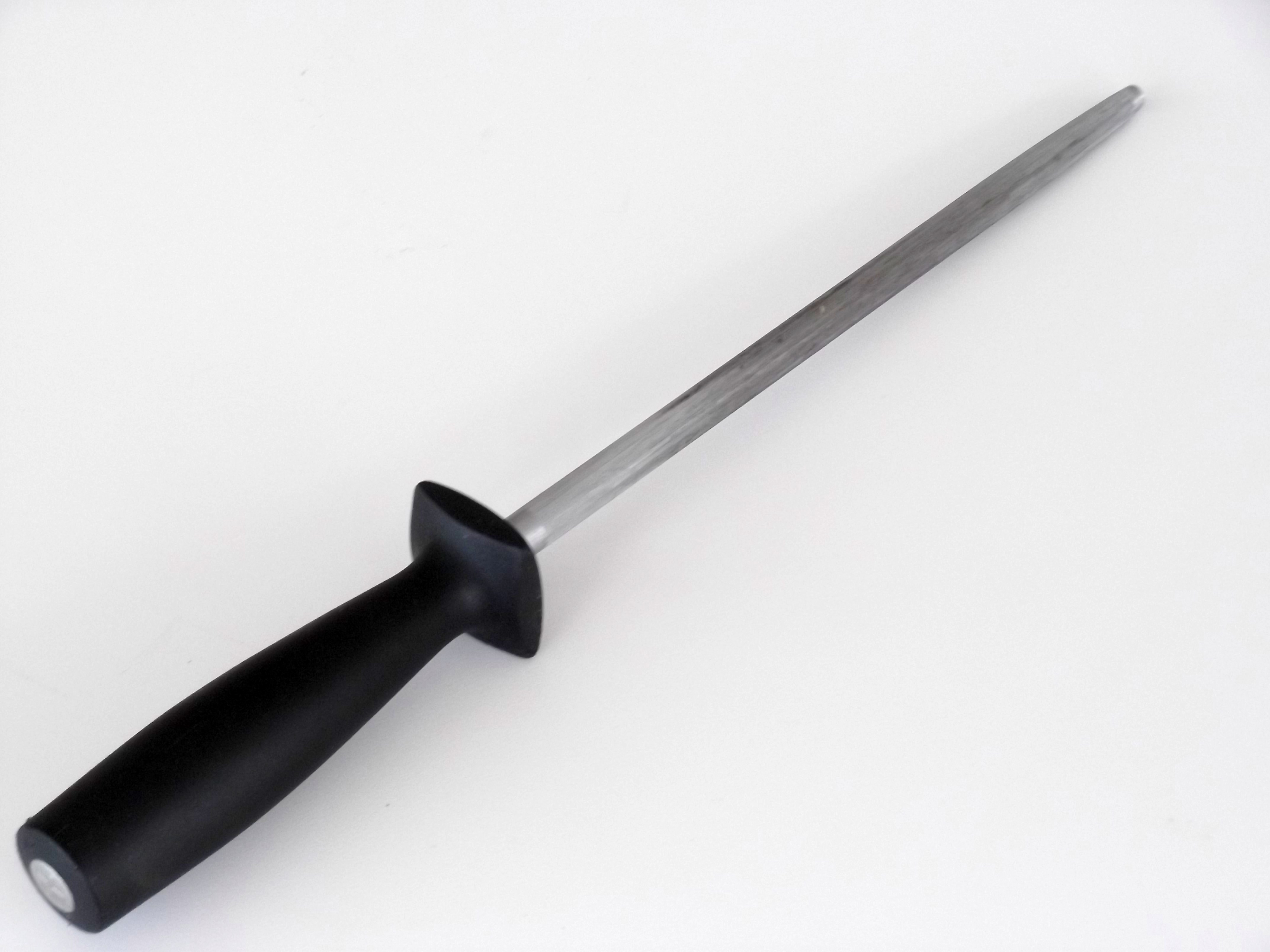
Using a steel, honing removes microscopic broken pieces and realigns the remaining ground edges. In order to properly maintain the edge on your knife, you will need to hone your knife after sharpening and every time you use the knife. This will minimize how often you’ll need to sharpen. To hone properly:

  • With your fingers of your non-primary hand protected under the steel’s guard, position the steel in front of your body
  • Hold the blade with your other hand at a 20 degree angle
  • Alternating sides for 5-10 strokes, touch the heel of the blade to the top of the shaft and draw the entire blade of the knife down the shaft in a sweeping motion until the tip ends up just above the guard
  • Here’s another great video – this one from CHOW – for the more visually-inclined: http://www.chow.com/food-news/55301/how-to-hone-a-knife/

After completing your sharpening and honing, test your knife by cutting into a tomato. If it cuts easily through the tomato’s skin, mission accomplished. For more on knives and my other favorite tools, visits my Tools page.

Posted in Uncategorized | Leave a comment

Kebabs

Sitting on a beautiful veranda overlooking Taksim Square in Istanbul, the Turkish kebabs could not have tasted better. Accompanied by mezze and beautiful Turkish salads, it was truly a feast to remember.   

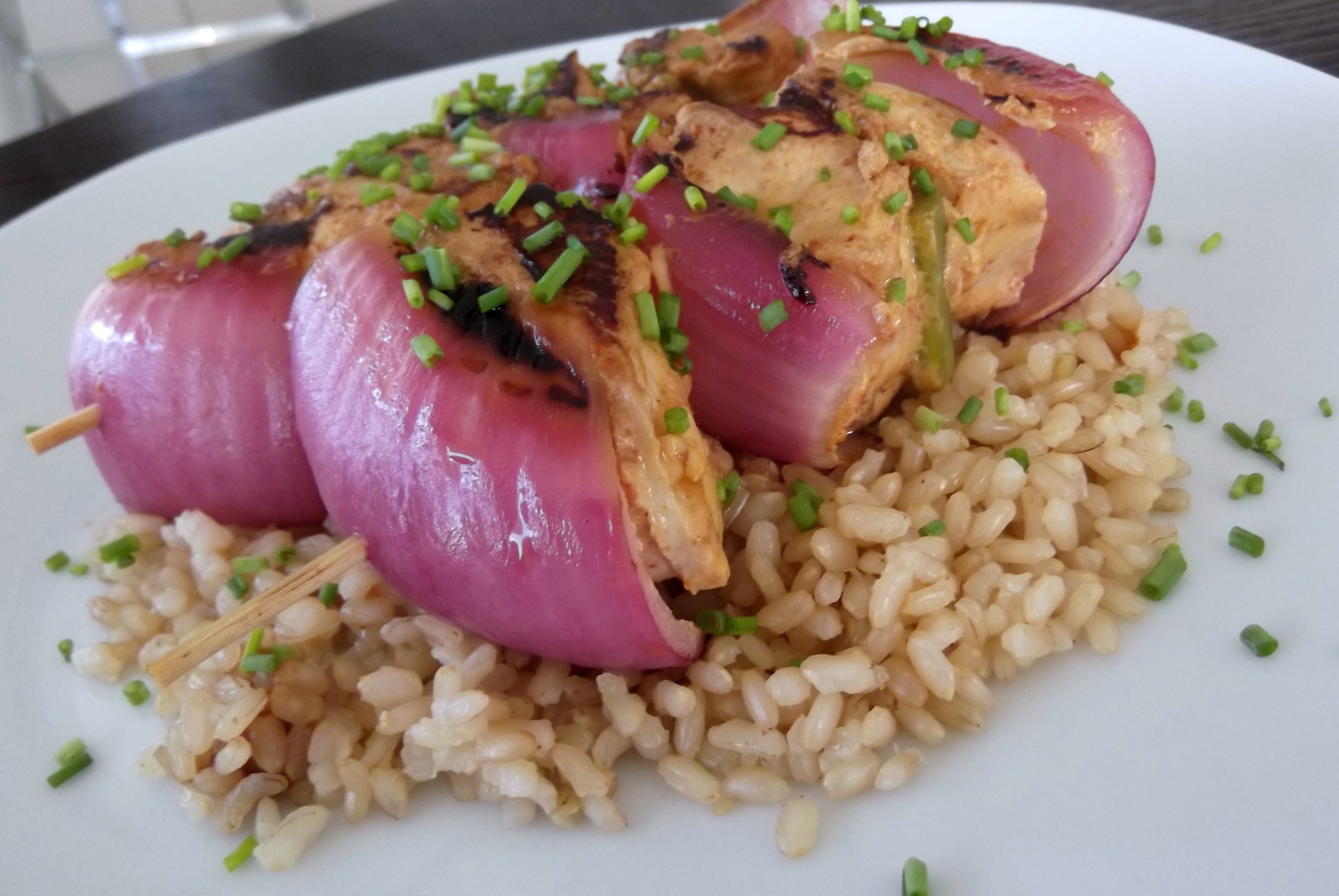
Upon returning to the US, I reminisced about those flavors and adapted a famous Turkish recipe to create my own Turkish Chicken Kebabs with Aleppo Pepper (see below). Moist, tangy and bookended with sweet red onions, they brought me back to Istanbul.

Although many think of kebabs as simply meat on a stick, the art of kebaplar (as it’s referred to in Turkey) is quite developed. Having originated in Turkey and later spread throughout the Middle East, Kebab is the general term used to describe small pieces of meat, threaded on to skewers and grilled (broiled) or roasted. With dozens of types of kebabs in existence, it is the perfect canvas for creating your own recipe.

In my recipe below, I first grill the kebabs to add color (because, remember COLOR=FLAVOR) and then roast them in the oven until they’re cooked through. Using this as background information on the Kebab’s basic ingredients and technique, how might you make your own recipe? What if you:

  • Vary the meat? Beef, lamb, pork and even fish would work beautifully.
  • Mix up the vegetables? Try peppers, mushrooms, tomatoes or even fruit!
  • Diversify the flavors? For a Persian version, add saffron. For an Indian twist, add curry powder and tamarind paste. For a Greek version, add oregano and mint and serve with tzatziki. And for an Asian adaptation, skip the yogurt and marinate in peanut butter, soy sauce, honey, garlic and ginger. You get the idea…

Turkish Chicken Kebabs with Aleppo Pepper*

Ingredients:

  • 2 tbsp –  Aleppo pepper
  • 1 cup – Greek-style yogurt
  • 3 tbsp – Olive oil
  • 2 tbsp – Red wine vinegar
  • 2 tbsp – Tomato paste
  • 2 tsp – Kosher salt
  • 1 tsp – Freshly ground black pepper
  • 6 – Garlic cloves (peeled and smashed)
  • 2 – Lemons (unpeeled and sliced into rounds)
  • 2 – Chicken breasts (boneless, skinless & sliced into 1 ½ inch cubes)
  • 1 – Red onion (cut into 2 inch slices to thread onto the skewers)
  • Juice of ½ lemon

Method:

  1. Mix in 1 tbsp warm water to the Aleppo pepper
  2. Add yogurt, olive oil, red wine vinegar, tomato paste, salt, black pepper, garlic and lemon slices and mix well
  3. Add chicken and coat with mixture – cover and chill for at least 1 hour (ideally overnight)
  4. Preheat oven to 400° and preheat grill (or grill pan)
  5. Prepare a baking sheet lined with parchment paper
  6. Thread chicken and red onion onto wooden (pre-soaked to avoid burning) or metal skewers alternating between chicken and onion
  7. Sprinkle each skewer with salt, pepper and additional Aleppo pepper
  8. Brush grill rack with oil and place skewers on the grill for a few minutes on each side – long enough to mark both sides with grill marks
  9. Transfer skewers onto the baking sheet and finish cooking them in the oven until the chicken’s internal temperature reaches 165° (use a probe thermometer)
  10. Squeeze fresh lemon juice over the top and serve over rice

*Adapted from a recipe by Chef Musa Dagdeviren

Posted in Uncategorized | 1 Comment

COLOR=FLAVOR

I’ll admit it – I sometimes have a tendency towards laziness…

For years, I used my handy-dandy Slow Cooker to make Brisket, Beef Stew and any number of other slow-cooked dishes. I’d throw the meat, vegetables, spices and liquid all in together and leave it to cook for 6-8 hours. The results were lackluster, but it sure was an easy way to get a meal on the table.

What I didn’t realize at the time is that my dish was pretty flat on the flavor front because I had skipped the most critical step – SEARING THE MEAT before I put it in the Slow Cooker.

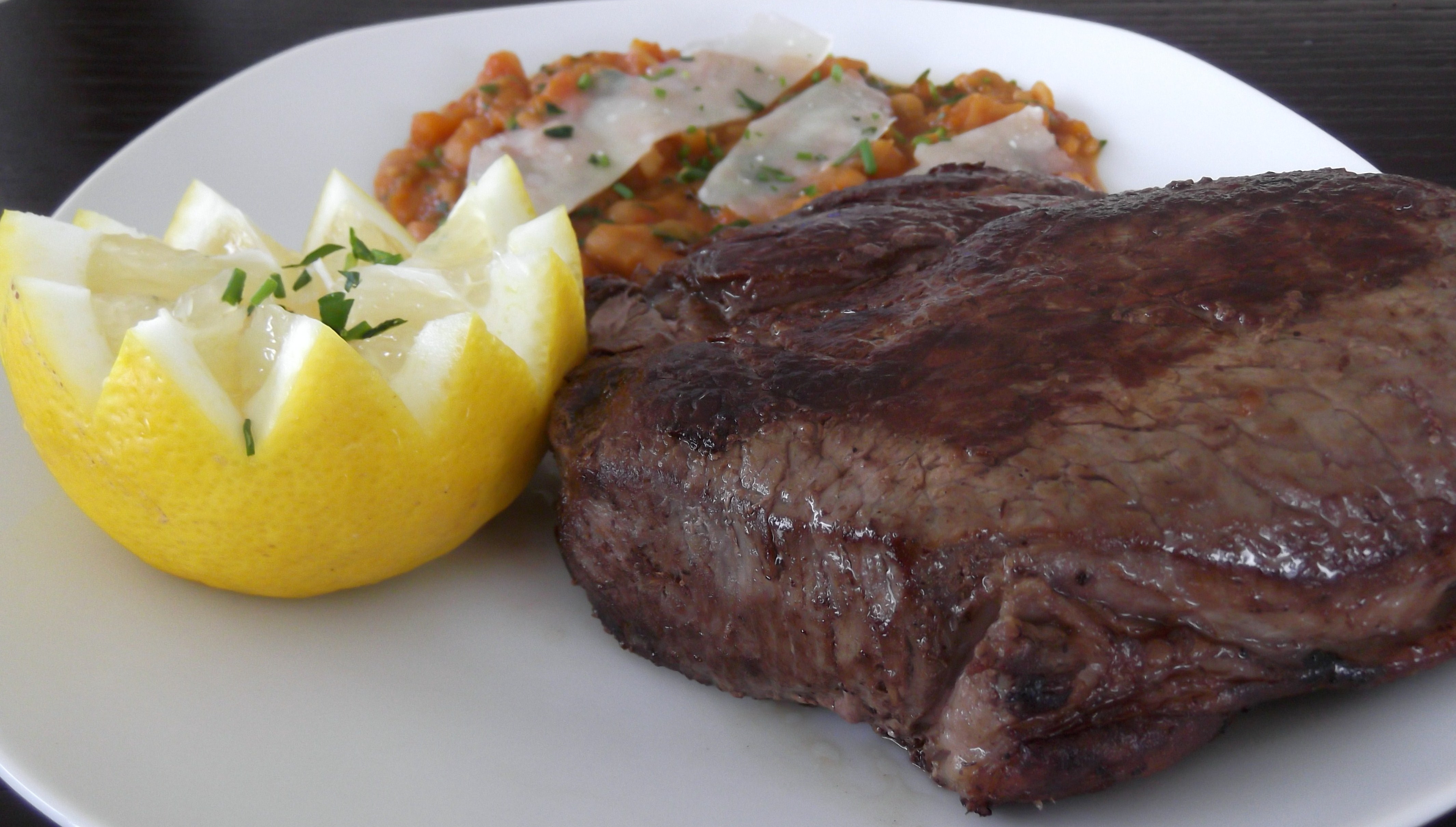
Searing – this process of placing your meat in a very hot pan (with a bit of oil) – will create a brown surface that will add tremendous flavor to your finished dish.

While it’s quite simple to do, here are a few guidelines for Searing:

  1. Bring meat to room temperature and dry it with paper towels to ensure a good crust
  2. DO NOT OVERLOAD the pan. You need to give your meat space to brown. In fact, if you overload your pan, the meat will boil in its own juices and end up looking pasty and tasting flavorless.
  3. DO NOT RUSH. Developing that deep brown caramelization on the surface of your meat takes time. But it’s worth it! How much time depends on the size of your piece of meat. Watch it carefully and flip when you see a dark brown crust. Remember, you’re looking for dark brown – not charred black.
  4. Don’t waste the drippings that are left on the pan after Searing. Add a liquid – wine, stock, etc… – to the pan while it’s still hot to lift up those flavors. Turn it into a sauce for your steak or simply add the liquid to your Slow Cooker.

Whether you’re using a Slow Cooker or simply preparing a steak, I promise that if you sear your meat, your end-product will be much tastier.

For more on this and other tips, please check out My Top Ten Keys to Cooking

Posted in Uncategorized | 3 Comments